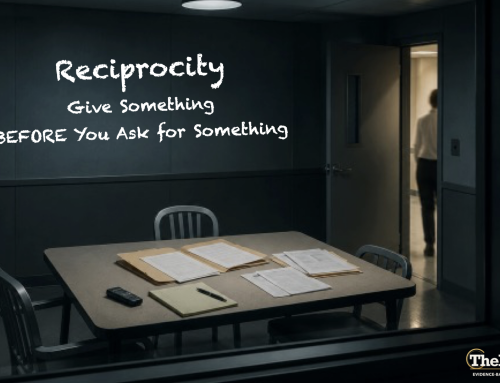
An Assault on Memory?
How Interviewers “Overwrite” Memories
by Stan B. Walters – The Lie Guy®
ORCID 0009-0002-1063-0519
DOI 10.5281/zenodo.22087027
Most of us who have worked on a computer know the sudden panic that comes from realizing we have overwritten a file. Something valuable was there, new information replaced it, and recovering the original may be difficult—or impossible. Investigators face a surprisingly similar risk in the interview room. Human memory is not a permanent recording of an event waiting to be replayed on demand. Memory is malleable and reconstructive. Each time a person recalls an event, that recollection can be influenced by information encountered afterward. The troubling question for investigators is this: What if some of that new information comes from us?
Memory Is Malleable
Decades of memory research, including the pioneering work of Elizabeth Loftus, have demonstrated how information introduced after an event can influence later recollection. The wording of a question matters. Details contained within a question matter. Assumptions communicated by the interviewer matter. Repeated questioning can matter. Once new information becomes incorporated into a person’s recollection, the individual may report it sincerely and with considerable confidence. That is an important distinction for investigators: an inaccurate memory is not necessarily a lie. The person may genuinely believe the information they are providing is an accurate account of what they experienced.
The Risk Extends Beyond the Subject
The danger is not confined to suspects or the problem of false confessions. Victims and witnesses bring the same human memory processes into the interview room. Age can increase vulnerability at both ends of the spectrum, but age is hardly the only consideration. Mental, emotional, physiological, and psychological conditions may influence how information is encoded, retained, and later retrieved. The interviewer who approaches every person and every interview in exactly the same manner ignores those individual vulnerabilities. Worse, an interviewer who enters with a predetermined theory and uses leading or accusatory questions may begin supplying pieces of the story instead of recovering them.
When the Interviewer Becomes Part of the Memory
That creates a serious investigative problem. Once information has been introduced by the interviewer, determining its original source can become increasingly difficult. Did the witness actually remember that detail? Was it contained in a question? Did another investigator mention it? Was the person repeatedly asked about something until it became incorporated into the account? An interview should help investigators distinguish between what the person experienced and information acquired afterward—not blur the boundary between the two. This is one reason narrative-based, answer-heavy interviewing is so important. Allow the person to provide what they remember before the interviewer begins populating the account with specific details and assumptions.
Protect Memory Like Evidence
Investigators spend considerable effort protecting physical evidence from contamination because once contaminated, its evidentiary value may never be fully restored. Memory deserves the same respect. Every question is an opportunity to recover information, but it can also introduce information. We cannot place someone’s memory in an evidence bag, seal it, and send it to a laboratory. We can, however, control how we approach it. Before asking the next question, consider whether you are recovering the person’s memory—or unintentionally “overwriting” something valuable that you may never be able to recover.
© Copyright 2026 by Stan B. Walters. All Rights Reserved.
Brief excerpts may be quoted with attribution and a link to the original article. Reproduction, redistribution, or use in training materials requires written permission.
Related Video:
Inside the Interview Room (ITIR) #47 – An Assault on Memory? How Interviewers “Overwrite” Memories
Watch on YouTube:
https://youtu.be/usC12YcAMQc