
A Cluster of Bad Cues Is Still Just Bad Cues: Rethinking Stress, Deception, and Behavioral Clusters
Behavioral clusters are often treated as stronger than single cues, but grouping unreliable behaviors together does not make them reliable. This article examines the danger of mistaking stress for deception, the problem with cue stacking, and why investigators must protect the statement by testing information against facts rather than relying on behavioral assumptions.
Why Isn’t Interview and Interrogation Training Audited Like Use-of-Force Training?
Use-of-force training is routinely reviewed, updated, and defended against policy, law, and performance standards. Interview and interrogation training should face the same scrutiny. If outdated methods can contaminate statements, create false confidence, or increase courtroom risk, agencies need more than tradition. They need an audit trail for what is being taught and why.
Stress Is Not Deception: The Danger of Treating Behavior as Proof
Stress is not deception, and behavior is not proof. When investigators mistake ordinary stress, discomfort, or nervousness for deception, the interview can quickly shift from inquiry to confirmation bias. Observable behavior may help guide better questions, but it should never replace the work of testing the subject’s account for reliability, context, detail, and evidence.
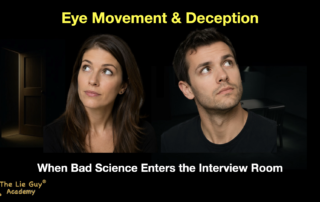
The Eye Movement Myth
Eye movements have been repeatedly marketed as a shortcut to detecting deception, but the research does not support that claim. Looking up, down, left, or right does not reliably reveal whether a person is lying. Investigators need evidence-based questioning and statement analysis, not recycled myths dressed up as technique.
What Makes an Interviewer Effective?
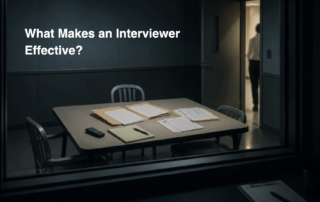
What separates effective interviewers from everyone else?Research examining more than 1,000 recorded investigative interviews found that only a minority of investigators demonstrated the behaviors associated with skilled interviewing. One of the most important findings was this: good investigators are not automatically good interviewers.Effective interviewers prepare before entering the room. They focus on building reliable investigative proof, allow subjects to provide uninterrupted narrative responses, actively listen for gaps and inconsistencies, and avoid premature credibility judgments. They also adapt their communication approach to the personality and emotional state of the subject rather than relying on rigid or confrontational methods.The most effective interviews are not driven by assumptions, pressure, or shortcuts. They are driven by preparation, listening, adaptability, and professional investigative methodology.

False Confessions Don’t Happen in a Vacuum
False confessions rarely emerge from a single tactic. More often, they develop through premature assumptions, confirmation bias, contamination, and unreliable deception assessments that gradually compromise statement reliability. This article examines how interviewer decisions can influence investigative outcomes long before a confession is obtained.